
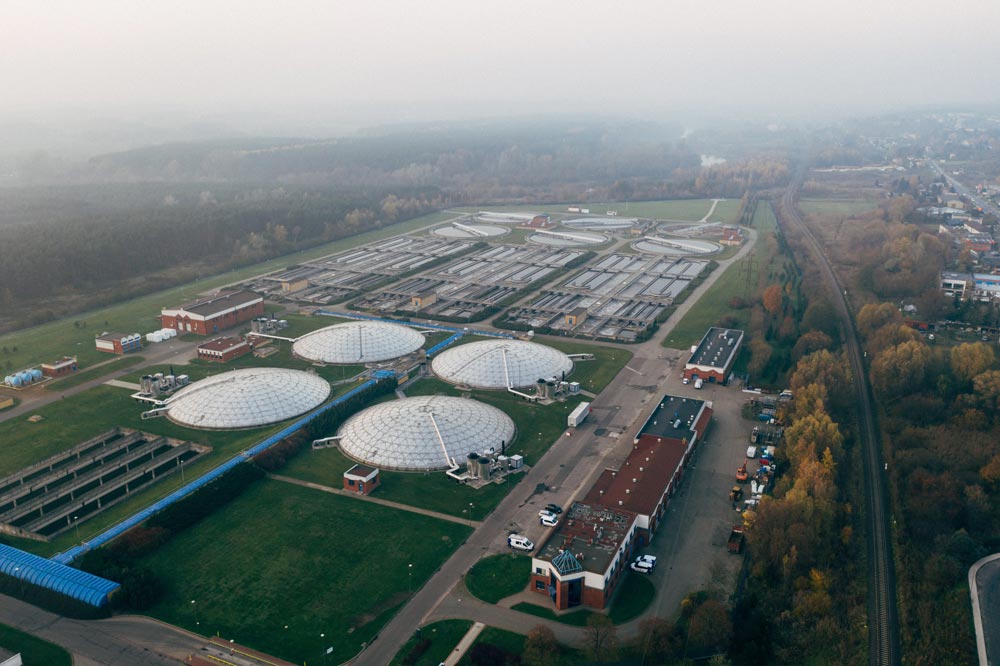
Facility managers sometimes use STP and ETP as if they were the same plant. They are related, but they treat different water and they are designed from different inlet numbers. Mixing the two on a drawing without a sample is how plants fail consent tests six months after handover.
STP: sewage from people
A sewage treatment plant takes wastewater from toilets, bathrooms and kitchens. Load follows occupancy. A 200-flat society in Dwarka or a 150-room hotel in Gurugram can be sized from people and peak hours. Biology does most of the work: MBBR, SBR or extended aeration, then settling, disinfection and, if you want it, reuse for flushing or gardening.
Odour and space matter more than a factory ETP on these sites. Neighbours sit next door. Jaljiwan STP plants for Delhi NCR often use packaged or underground tanks so the plant fits a basement or a service yard, with covers and ventilation planned with the civil contractor.
ETP: water from a process
An effluent treatment plant takes process wastewater. That stream may carry colour, oils, metals, solvents or wild pH swings. You cannot size it from headcount. You need an analysis across shifts. Design often starts with equalisation, pH correction and coagulation, then biology if the COD will support it. Recycle RO comes last, only after the water is kind to membranes.
Units in Okhla, Bawana, Manesar and Noida send us very different effluent. A dyeing ETP is not a food-plant ETP. See ETP plants for how we build that train.
Can one plant do both?
Combined schemes exist when streams are compatible. Dumping plating rinse into a society STP will kill the biomass. On mixed campuses, keep toilets on the STP and process drains on the ETP until a lab says they can meet. That costs more on day one and less in consent trouble later.
Reuse after treatment
Both plant types can feed tertiary UF or RO for flushing, gardening or cooling make-up. Success depends on a stable secondary stage, not a membrane bolted onto a plant that still smells. If you are unsure which plant you need, send city, occupancy or process type and a water report to Jaljiwan in Dwarka. We will say STP, ETP or both, in plain language.